Connected or Lost: Why Business Networks Are the Backbone of Modern Healthcare
-
 Jason de Pol, Key Account Manager
Monday, 16 March 2026

Once connected, always connected, wherever you are: business networks offer numerous benefits to those involved. Whilst they were originally developed to facilitate the electronic exchange of data, business networks now play a different role. What are the fundamental challenges? How can platforms help overcome these hurdles? And why are business networks – particularly in the healthcare industry – not just a ‘nice to have’, but essential nowadays for tackling ever-increasing complexity?








 Although the NHS Digital’s Interoperability Toolkit and the Global Digital Exemplar Programme were launched years ago, hospitals have been hampered by crises and limited resources in achieving seamless data flows. Yet the benefits of interoperable processes in hospitals are immense. By establishing seamless data flows and promoting interoperability, healthcare providers can reduce costs, increase transparency and improve patient care.
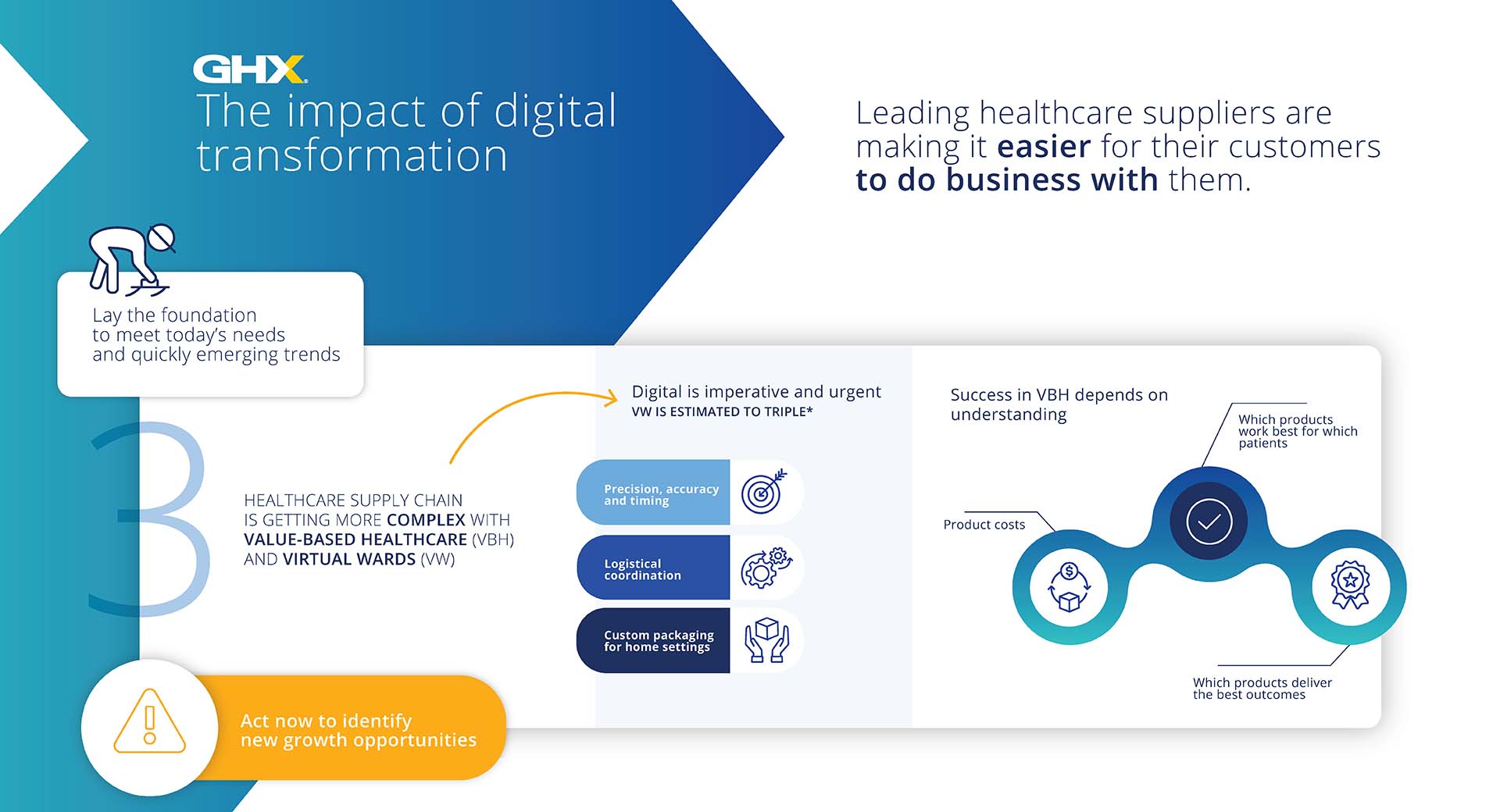 Value-based healthcare, video consultations and virtual wards - the healthcare industry is undergoing radical change as part of its digital transformation. Suppliers must keep up with their customers’ needs, provide digital experiences, increase automation and standardise their supply chain processes.
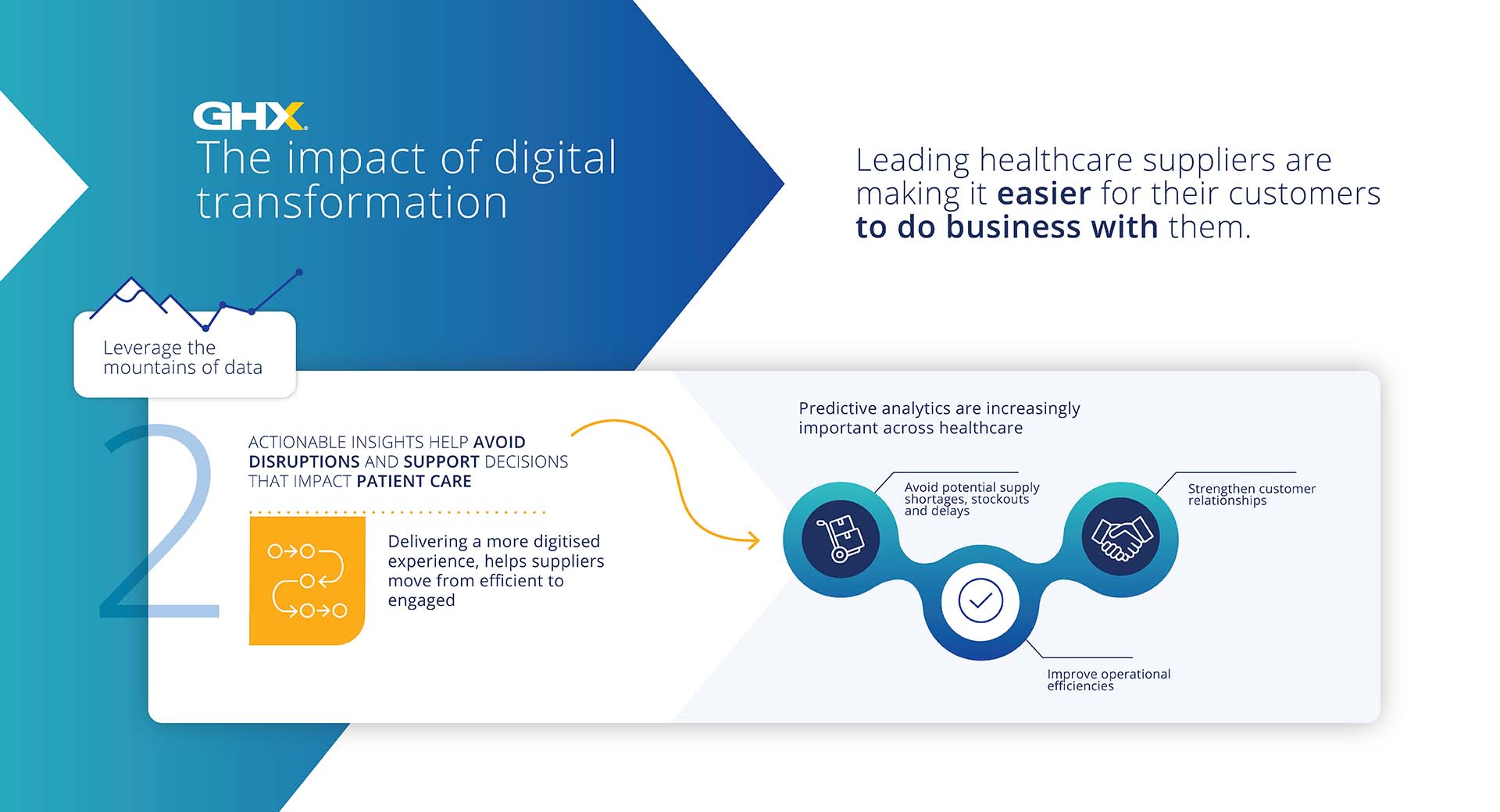 Digital transformation brings many advantages along with an abundance of data. If suppliers can harness this data to predict future events reliably, they can gain a competitive advantage and better support decisions impacting patient care. The key to success is predictive analytics.
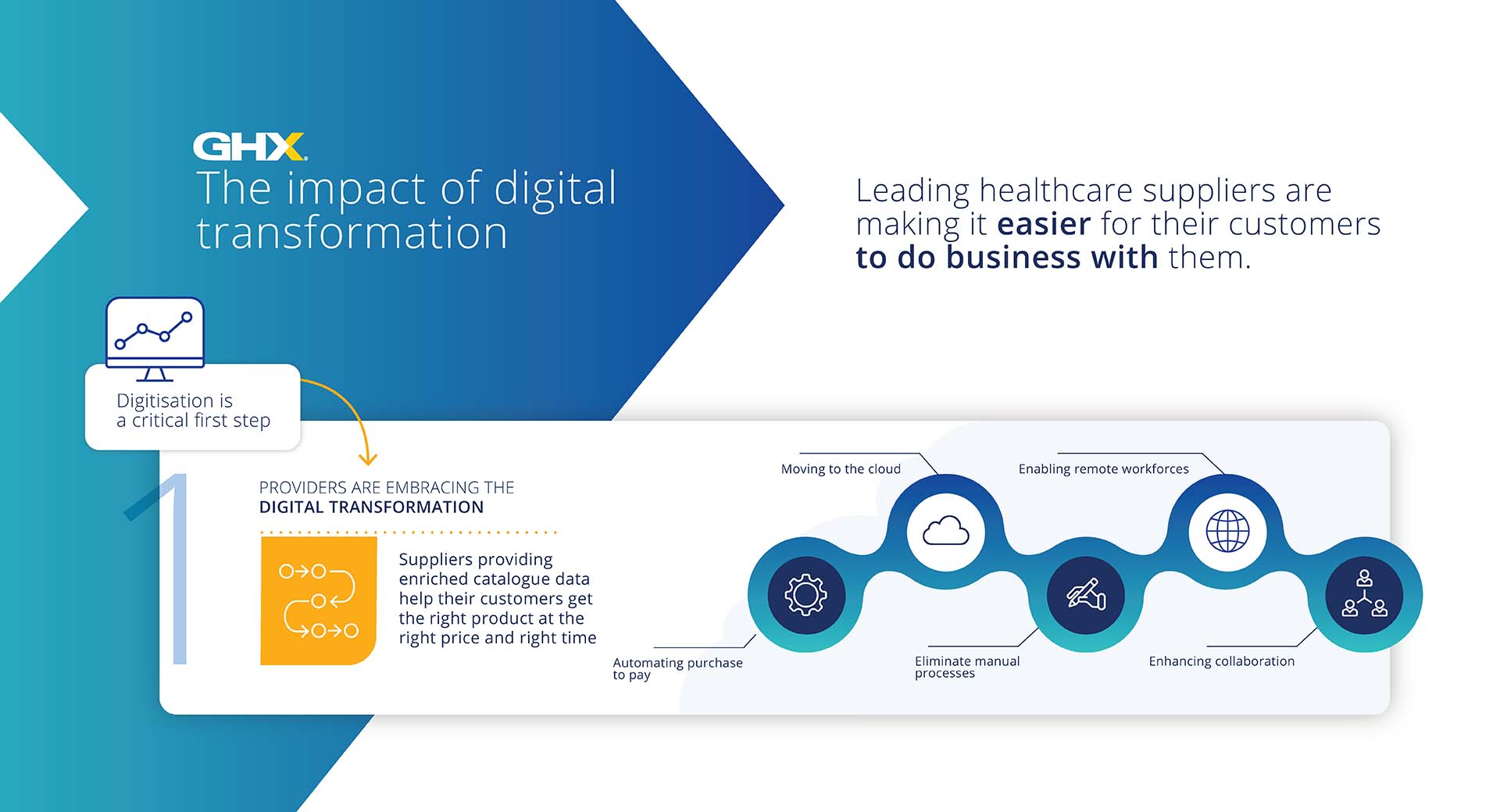 Lower costs, optimised processes, stronger customer relationships: digital transformation is associated with many advantages for healthcare suppliers. However, to realise these benefits, more is needed than just introducing digital solutions. Suppliers must understand the entire customer experience and make their business processes as simple as possible.